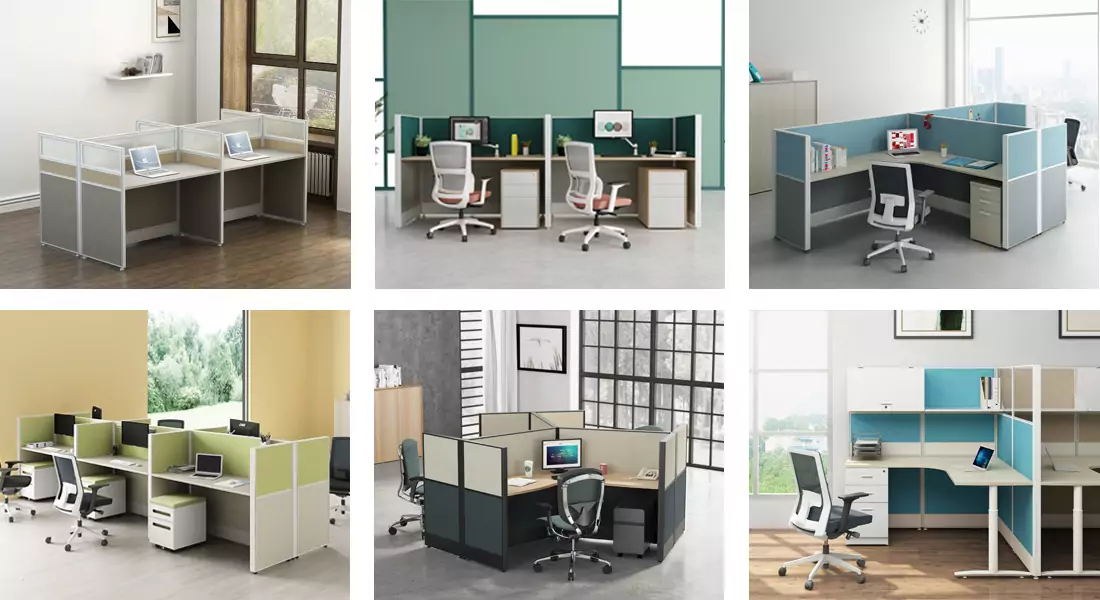
From a commercial office furniture perspective, thoughtfully arranged workspaces can help organize daily activities and accommodate different employee needs. When corporate leaders and facility managers evaluate their current floor plans, they may find that existing furniture configurations need adjustments to accommodate changing hybrid work patterns.
Adapting to changing work patterns requires careful consideration of space planning, workstation functionality, and ergonomic needs. Rather than relying on fixed layouts, organizations can consider flexible furniture solutions that accommodate both individual tasks and team collaboration.
By integrating adaptable components into the structural layout, companies can create a more adaptable workspace that accommodates diverse departmental requirements. Understanding how employees use the workspace can help organizations make more informed decisions about workplace layout and functionality.
Creating this balance involves combining individual work areas with shared spaces that accommodate different activities throughout the workday. An effective strategy considers both the acoustic properties of the room and the visual flow of daily traffic.
Understanding Diverse Layout Strategies
When organizations begin to restructure their floor plans, evaluating various office workstation types becomes a crucial step in matching physical infrastructure to specific operational goals. We regularly see that different departments possess unique workflow characteristics that demand tailored spatial solutions.
For example, software development teams may prefer layouts that facilitate peer review and knowledge sharing, while financial analysts may favor more defined work areas that accommodate tasks requiring sustained concentration. Understanding these different needs can help facility planners organize zones for individual tasks and collaborative activities.
Integrating different workstation configurations can create a more varied office layout while accommodating the needs of different departments. We recommend that facility planners assess workspace usage before committing to a specific workstation configuration.
This assessment helps planners identify whether employees spend more time at their desks or move frequently between meetings. Aligning the physical environment with employees’ work patterns can help create a layout that better accommodates daily operational needs.
The Strategic Value of Shared Desking
As companies seek to make effective use of office space while maintaining a welcoming atmosphere, shared desk layouts can provide an alternative to individually separated workstations. Partnering with a reliable office benching manufacturer in China can help enterprises source scalable shared-desk solutions for changing workforce requirements.
These shared desk configurations may suit firms that need to adjust workstation arrangements as team sizes and space requirements change. A clean and uncluttered workspace can help reduce visual distractions and support a more organized working environment.
Shared desks with suitable cable management options can help organize power cords and data cables and keep work surfaces more orderly. Depending on the layout, these setups can provide more open sightlines and make it easier for employees to communicate across shared work areas.
Such configurations can create a streamlined appearance, while material selection and product specifications should be evaluated according to the intended level of commercial use.
Sourcing Quality Commercial Furniture Solutions
At XINDA CLOVER, we offer commercial furniture solutions designed to accommodate a range of contemporary office requirements. As a commercial office furniture provider, our product portfolio includes office workstations, shared desks, and private cubicle systems for a range of commercial environments.
Our furniture solutions incorporate different panel materials, frame options, and surface finishes according to product specifications and intended applications. Our production processes take product specifications and quality requirements into account to support consistent commercial furniture manufacturing.
By offering customization options for material finishes and dimensions, where available, we help businesses select furniture that reflects their brand identity and suits their workspace requirements. Buyers can evaluate these options according to their project specifications and environmental requirements.
Finalizing the Ideal Spatial Configuration
Ultimately, selecting suitable commercial furniture requires balancing design preferences with practical workspace requirements. As corporate needs evolve, facility managers can review different workstation configurations to accommodate changing team sizes and work patterns.
We recommend allowing flexibility in floor plans so that future adjustments can be
considered as workspace requirements change. Whether furnishing a small office or a larger corporate facility, sourcing modular furniture from a suitable manufacturer can give businesses more options when layouts need to change.
By considering adaptable designs, material specifications, and spatial planning, organizations can select furniture that accommodates different work activities and operational needs.
By gathering feedback from employees who use the space daily, leadership teams can make informed adjustments to furniture layouts and better align the workspace with day-to-day activities.