Office layouts often change as companies grow, relocate, or update working areas. A clear understanding of furniture assembly helps businesses plan office adjustments with fewer disruptions. At XINDA CLOVER, we focus on providing office furniture solutions for commercial projects, including workstations and cubicle systems designed for practical installation and use.
Understanding the Structure Before Disassembly
Before learning how to take apart office cubicles, it is important to understand the basic structure of a cubicle system. Most office cubicles include panels, frames, desktops, connectors, and accessories. Knowing how these parts connect helps facility teams remove components in an organized way.
A careful inspection should be completed before starting the process. Teams can check panel positions, connection points, cable routes, and desktop supports. This preparation reduces confusion during removal and helps protect reusable furniture parts for future office planning.
Preparing Tools and the Working Area
The first step is creating a suitable workspace for disassembly. Employees or contractors should clear personal items, disconnect electrical equipment, and organize small hardware such as screws and fasteners. A labeled storage method can help identify each component after removal.
Different cubicle designs may use different connection methods. Some systems rely on clips, brackets, or fasteners, while others use frame-based structures. Understanding the connection type allows workers to select suitable tools and follow a safer removal process.
Step-by-Step Process for Removing Cubicle Components
When businesses need to know how to take apart office cubicles, they usually begin by removing accessories and desktop items. Shelves, monitor arms, and cable management parts should be taken off first. This creates more space and makes the main structure easier to handle.
The next stage involves separating desktops from supporting frames. After removing the desktop surface, workers can disconnect panels and aluminum frames based on the original assembly method. Keeping removed parts together can support future reinstallation or relocation projects.
Choosing Cubicle Designs That Support Flexible Use
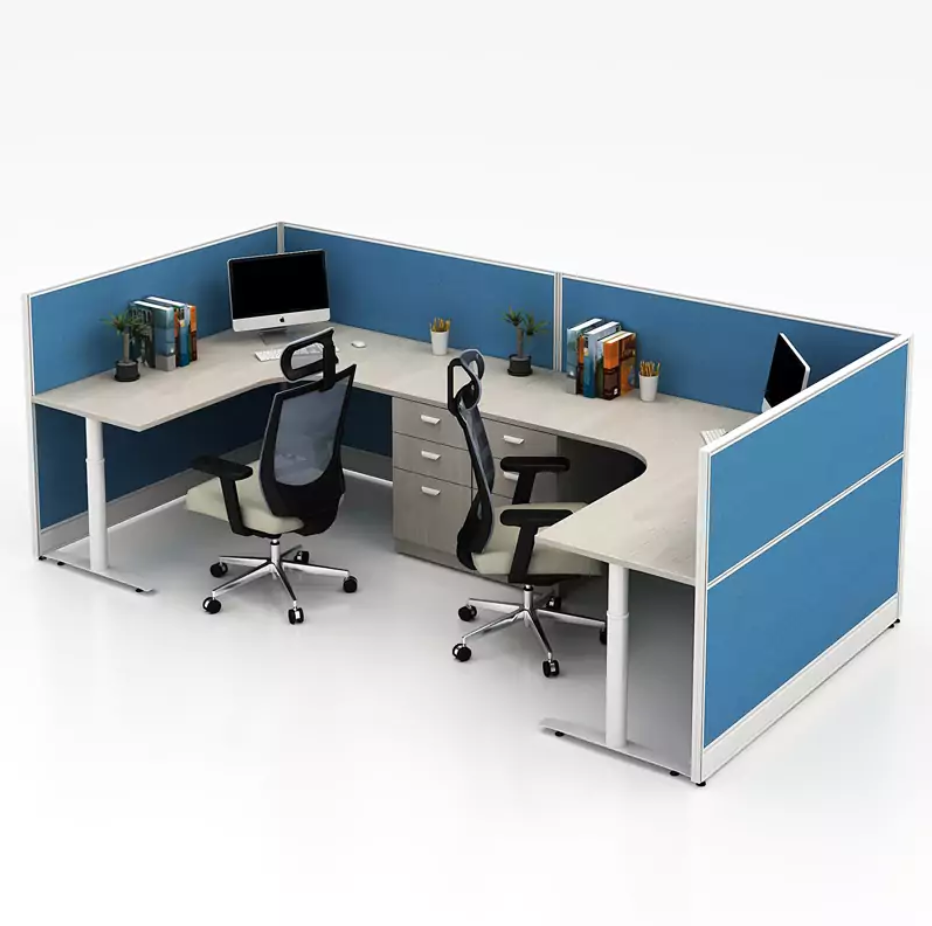
A well-designed cubicle system can simplify future workspace adjustments. Our Hot Sale Modern 2 Person Office Workstation Desk is developed for commercial office environments. This product belongs to the Category Call Center Cubicles range and uses a 32mm partition thickness with a panel-base system and an aluminum frame structure.
The workstation features a unique snap fastener design that allows quick assembly. Colorful end trimming options can be adapted to different project requirements. This type of design helps businesses manage workspace layouts while maintaining a clean and organized appearance.
The desktops are made from durable E1 particle board and include cable entry holes for practical equipment arrangement. The screens are 30mm thick with a powder coated frame. They use removable fabric upholstery, allowing staff to customize their space with notes, diagrams, or calendars.
Maintenance and Storage After Removal
After cubicles are separated, proper storage becomes an important part of office furniture management. Panels should be placed carefully to avoid surface damage, while hardware should be stored in marked containers. This approach helps businesses prepare components for later use.
For companies managing multiple office locations, reusable furniture can support changing workspace needs. A clear record of removed parts, sizes, and positions can make future installation more efficient and reduce unnecessary replacement.
Why Disassembly Knowledge Matters for Businesses
Office furniture is often part of a larger workplace project. When companies move departments or adjust seating plans, knowing the construction of cubicles can save time during preparation. A clear removal plan also helps teams coordinate with installers, facility managers, and project contractors.
Cubicle components are usually designed with repeated use in mind. Proper handling during disassembly can help maintain the condition of panels, frames, and accessories. This is useful for businesses that need flexible office arrangements across different stages of development.
Supporting Commercial Furniture Projects with Practical Designs
For commercial buyers, furniture selection involves more than appearance. They also consider installation methods, space planning, maintenance, and long-term usability. A workstation system with organized components can provide convenience during office updates and daily management.
We develop office furniture solutions based on practical workplace needs. Our products are designed for offices, call centers, and other professional environments where efficient space use is important. By combining functional structures with customization options, we support different project requirements from planning to installation.
Planning Future Office Changes with Better Furniture Knowledge
Modern workplaces require furniture systems that can adapt to different business stages. Understanding how to take apart office cubicles helps project teams handle relocation, expansion, and renovation tasks with better preparation.
Office furniture solutions can be designed to address both current workspace requirements and future changes. An experienced office furniture manufacturer with expertise in workstation and cubicle products can support business projects with practical designs and production capabilities tailored to different workspace needs.
Creating More Adaptable Office Environments
Office furniture planning is not only about selecting desks and panels. It also involves understanding installation methods, maintenance needs, and possible layout changes. With suitable preparation, companies can manage office transformations in a more organized way.
Through thoughtful product development and attention to practical details, we help businesses create workspaces that match their operational needs. Flexible furniture structures can support different office arrangements while maintaining usability and professional presentation.