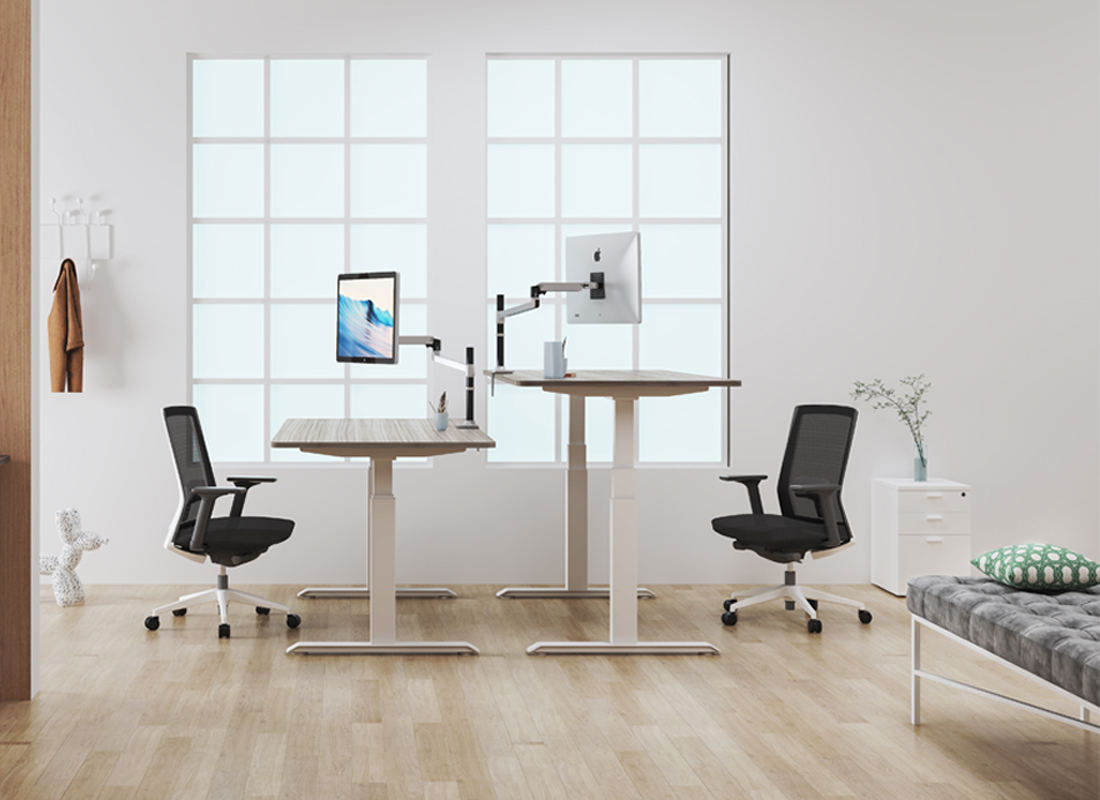
The journey of the adjustable height table traces back to specialized drafting and medical stations, but its modern incarnation has revolutionized how we think about workspace ergonomics. As sedentary lifestyles became a recognized health crisis, the demand for dynamic office solutions surged. Over the past decade, technological advancements—particularly the integration of smooth electric motors—transformed sit-stand desks from luxury novelties into mainstream wellness staples.
Today, these tables hold profound significance for both students and office workers. For students spending long hours studying, a height-adjustable desk promotes better posture, prevents slouching, and accommodates rapidly changing heights during growth spurts. For office professionals, the ability to effortlessly alternate between sitting and standing combats fatigue, reduces the risk of musculoskeletal disorders, and boosts daily productivity and focus. Usually, professional office furniture manufacturers design their adjustable height tables to handle substantial loads, generally ranging from 80 kg to 150 kg, or 176 lbs to 330 lbs.
Understanding Load Capacity: How Much Weight Can They Hold?
When investing in an ergonomic workspace, a critical question arises: how much weight on adjustable height table models can safely be supported without compromising performance?
The structural integrity and load-bearing capacity of these desks depend heavily on their materials and engineering. High-quality adjustable desks typically feature heavy-duty metal frames paired with robust tabletops made of MFC or MDF. Stability is further enhanced by reinforced crossbeams and precision-engineered single or dual motors.
Standard Duty (80 kg / approx. 176 lbs): Ideal for home offices, students, and light corporate setups. Easily supports a laptop, a single or dual monitor setup, books, and everyday stationery. For example, XINDA CLOVER 2YJHT-AJ-E adjustable height tables can load up to 80KG.
Heavy Duty (120 kg to 150 kg / approx. 265 lbs to 330 lbs): Built for power users, gamers, and professionals with demanding hardware. These can effortlessly accommodate heavy multi-monitor arrays, high-end desktop gaming rigs, heavy studio equipment, and full shelving units without wobbling or straining the motor. Like XINDA CLOVER Electric Three Legs L Shape Adjustable Desks, these tables have 3 legs with L shapes to fit into tight corner spaces, to maximise the useable space of your desktop.
Ultimately, choosing a desk with the right weight capacity ensures long-term durability and safety, allowing you to work or study with absolute peace of mind.
Material Science Solutions for Extended Span Surfaces
The structural resilience of large-scale collaborative surfaces depends heavily on advanced material science and underlying framework engineering. Long boardroom tables spanning several meters face continuous downward gravitational forces and localized surface pressure from heavy media hardware.
Partnering with a reliable conference table manufacturer in China can help corporate planners identify suitable tabletop materials and support structures for large meeting tables. Preventing structural bowing requires strategic placement of internal steel support beams and durable leg connection nodes that distribute weight evenly across the entire surface area.
Depending on the selected materials and finishes, suitable surface treatments can help protect tabletops from everyday wear and changes in indoor humidity. Selecting suitable materials and structural configurations can help facility managers maintain meeting tables for regular commercial use and meet the visual requirements of executive spaces.
Advanced Cable Management and Operational Risk Mitigation
Integrating technological hardware into kinetic and static work surfaces introduces physical clutter and electrical safety considerations that demand structured spatial management. When considering how much weight on adjustable height table frames can support, facility planners should also account for the added mass of cable management systems, power modules, and mounting brackets.
Organizing power cords and networking cables through suitable cable management channels can help reduce tripping hazards and protect connections from accidental disconnection or wear. Dynamic workstations require flexible cable chains that expand and contract smoothly during vertical movement without binding or exerting tension on wall outlets.
Organized cable management pathways can help keep work areas clear and support the practical safety requirements of commercial workspaces while maintaining a more orderly appearance.
Strategic Procurement and Long-Term Facility Resilience
Ultimately, optimizing commercial real estate requires a holistic procurement strategy that balances ergonomic versatility, structural stability, and aesthetic cohesion. Establishing a standardized inventory of interchangeable modular components allows facility teams to reconfigure meeting areas and personal workstations efficiently as organizational structures and headcounts evolve over time.
Working with experienced suppliers such as XINDA CLOVER can help buyers identify commercial furniture solutions suited to their workspace requirements. By reviewing space utilization, furniture specifications, and project requirements, corporate decision-makers can make more informed furniture procurement and workspace planning decisions.
Prioritizing adaptable, high-performance furniture can help businesses create flexible workspaces that accommodate meetings, individual work, and changing organizational requirements.