The most effective answer to how to make office cubicle more private is to combine visual boundaries, acoustic control, and a layout matched to the employee’s work. Taller panels can reduce visual interruptions, but they cannot solve nearby conversations. Headphones may improve concentration, but they do not protect confidential speech. Privacy therefore requires several coordinated changes.
Why Is Office Cubicle Privacy Becoming More Important?
Privacy also includes more than hiding a desk. It covers visual distraction, speech privacy, control over personal space, and protection of information displayed or discussed.
Office privacy should vary by role because employees create different levels of noise, visitor traffic, collaboration, and confidential information. A sales team may need quick exchanges between calls, while payroll staff may require stronger speech and screen privacy.
Job role | Main concern | Suitable cubicle approach |
Call center or sales | Voice overlap | Acoustic panels, headsets, and separation from quiet teams |
Finance, HR, or legal support | Confidential speech and documents | Higher panels, controlled openings, and private call rooms |
Designers and engineers | Focus plus teamwork | Semi-private stations with storage boundaries and shared project zones |
Managers | Focus, meetings, and accessibility | Larger cubicles, partial doors, or high-wall configurations |
Administrative staff | Concentration and visitor access | Mid-height panels with clear sightlines to service areas |
Before ordering furniture, record how often each department makes calls, receives visitors, discusses sensitive topics, collaborates at the desk, and needs uninterrupted focus. This avoids installing identical cubicles that solve one team’s problem while restricting another team.
Office privacy needs differ because workplace culture influences how employees view personal territory, hierarchy, visibility, and collaboration. However, regional tendencies should guide planning rather than become rigid rules, because job duties and company culture remain equally important.
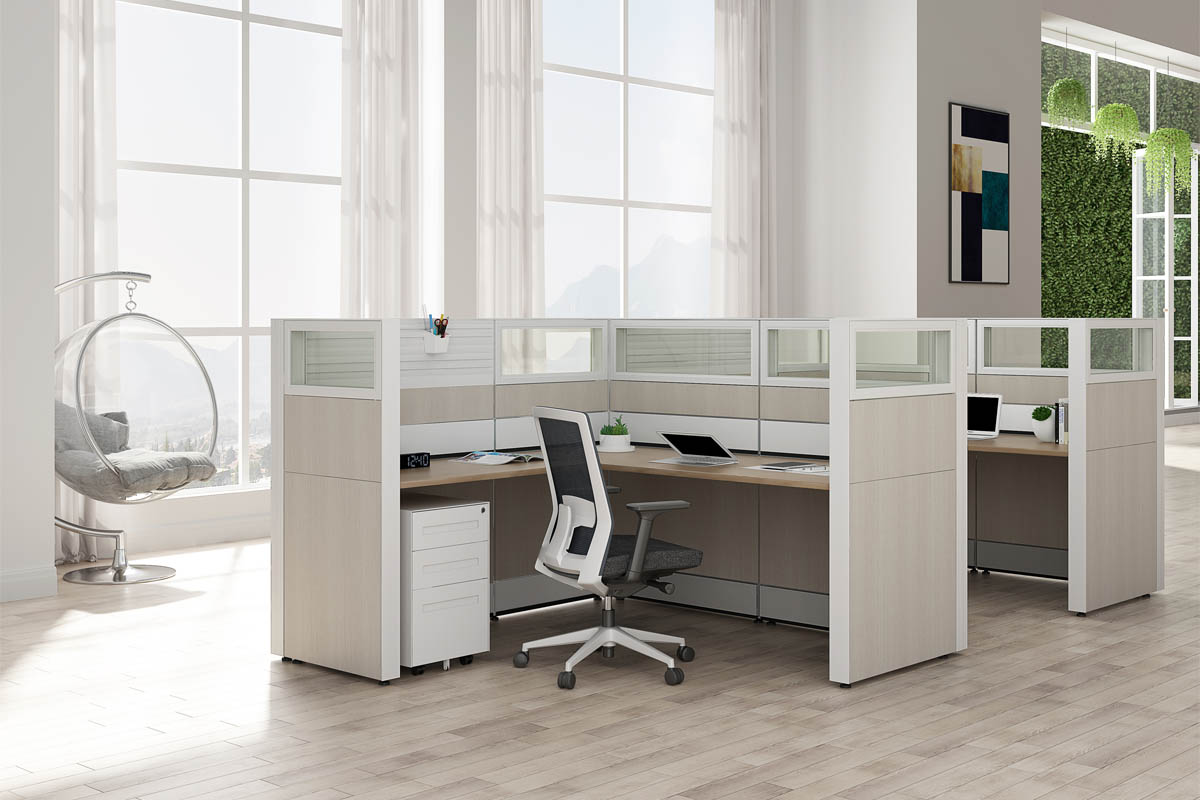
Regional expectations also shape office cubicle privacy. In North America, employees often prefer clear personal boundaries while remaining accessible to coworkers, making medium-height panels a practical choice. East Asian workplaces may prioritize team visibility and communication, with lower screens for general teams and higher panels for focused or sensitive tasks. In the Middle East, privacy-sensitive, client-facing, and management areas may require stronger visual separation, including high partitions, controlled entrances, and more enclosed meeting or executive spaces within the office layout.
How to Make an Office Cubicle More Private?
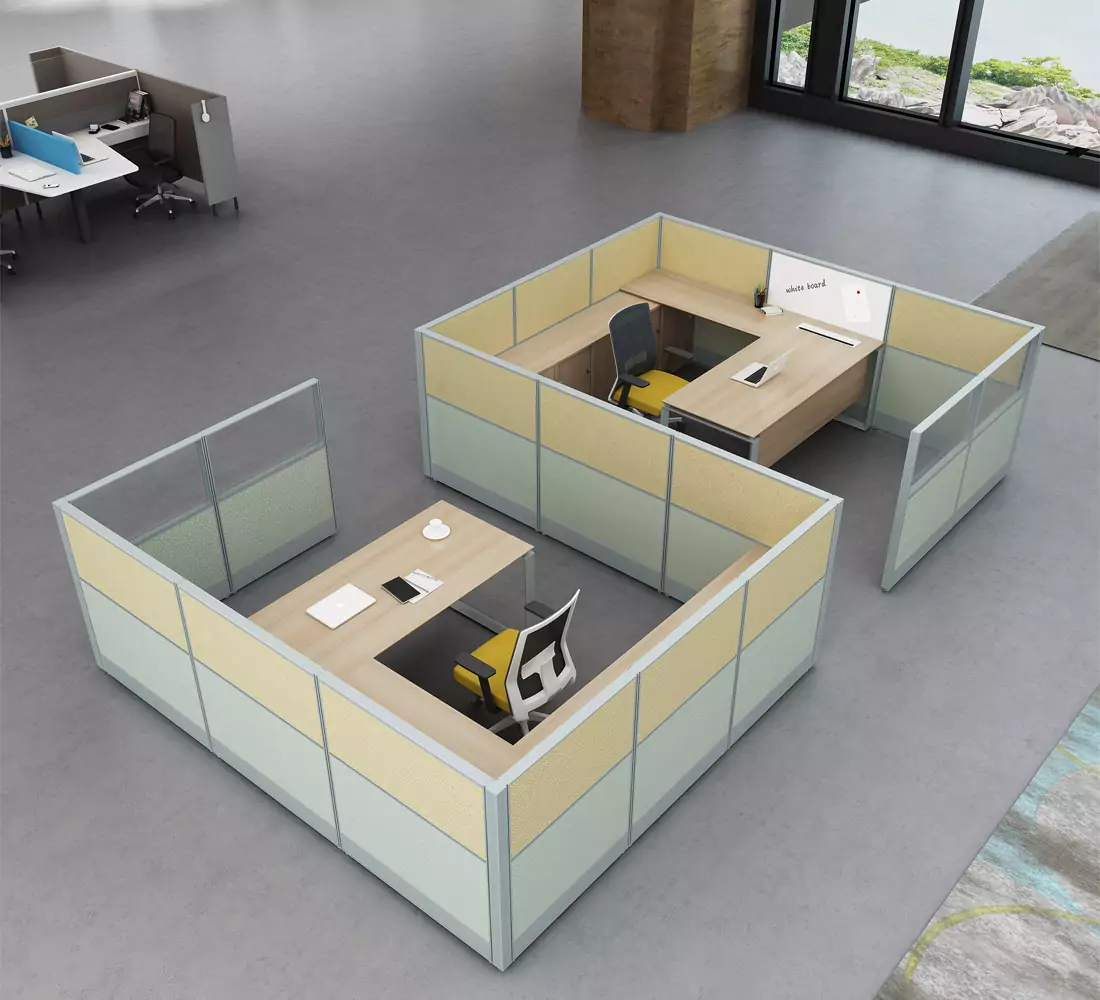
To make an office cubicle more private, work in layers: block direct sightlines, define the entrance, absorb sound, and separate incompatible activities. Start with additions to the current layout, then consider higher or more enclosed cubicles if the privacy gap remains.
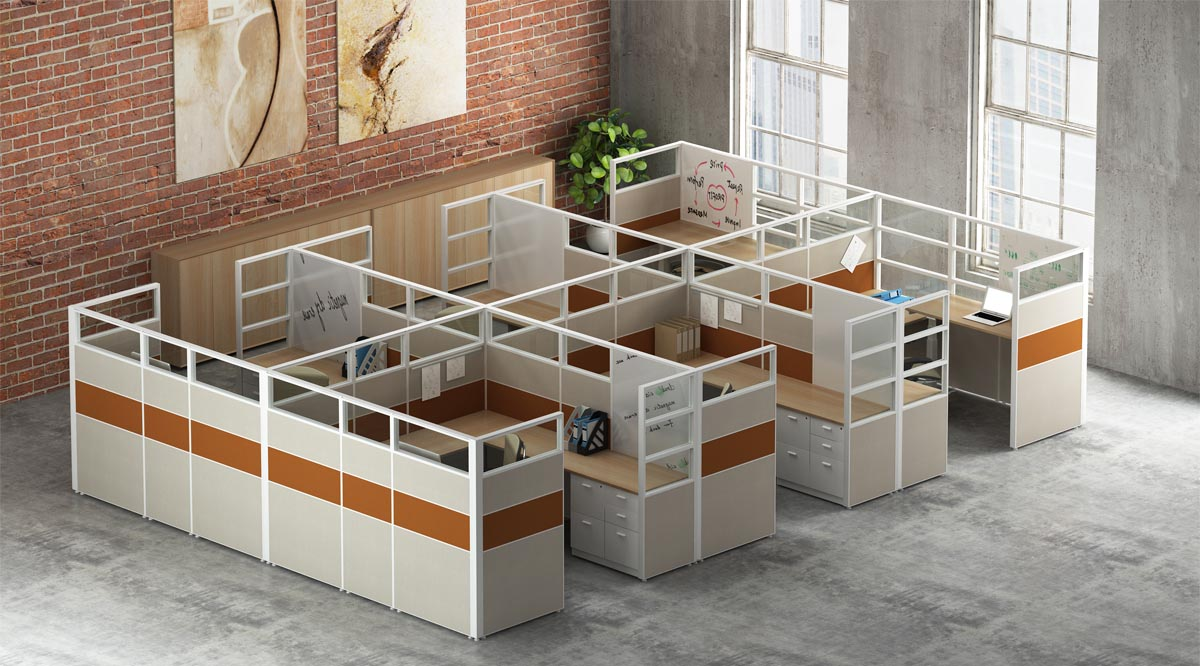
Visual Barriers Improve Privacy Without Overbuilding
Visual privacy can often improve without permanent walls. Screens, shelving, boundary elements, and strategically oriented workstations can shield employees from distractions while keeping an open office usable.
- Add cubicle extenders. Raise panels beside busy aisles or neighboring monitors. Check lighting, ventilation, sprinklers, and local requirements before installation.
- Add a cubicle door where permitted. A partial- or full-height door can signal when interruptions should be limited, but its design must comply with applicable fire, egress, ventilation, and accessibility requirements.
- Install desktop screens. Desk-mounted partitions block direct views between adjacent users without replacing the complete workstation.
- Use a small mirror for awareness. A desktop or convex mirror can show someone approaching from behind. Position it so it does not reflect screens or neighboring workstations.
- Include desktop plants. Plants can soften exposed edges, but they should not obstruct equipment, circulation, or communication.
- Use bookshelves and storage cabinets. Storage along an exposed side provides organization and visual separation. Secure tall units and keep emergency routes clear.
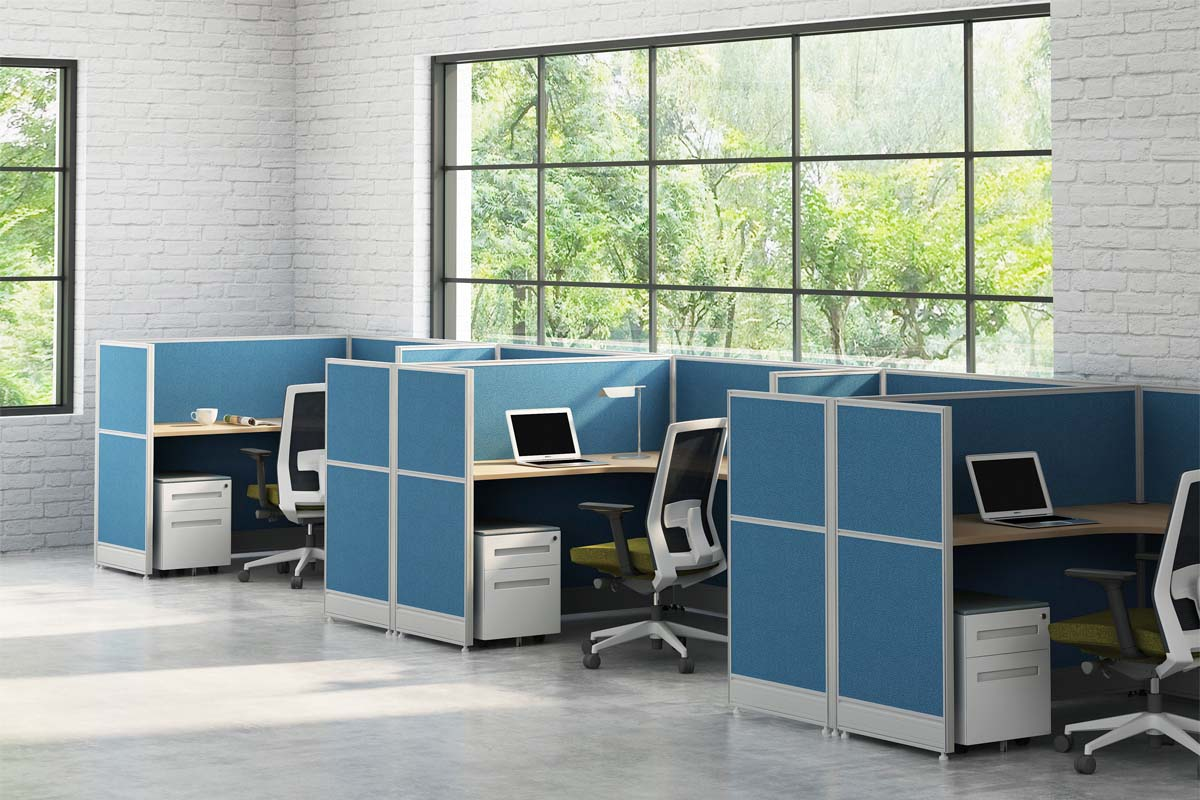
Layered Acoustic Measures Improve Workplace Comfort
Acoustic comfort improves when the office absorbs reflected sound, interrupts direct speech paths, and separates noisy work from quiet tasks. Noise-canceling headphones can support individual concentration, but they do not prevent other people from overhearing a call.
Use a layered plan:
- Install fabric-covered or sound-absorbing panels near speaking positions to reduce reflections.
- Add desk screens or taller partitions between adjacent employees to interrupt direct speech paths.
- Use professionally designed sound masking to make distant speech less intelligible.
- Provide enclosed rooms or booths for confidential calls.
- Separate call-heavy teams, printers, informal meetings, and quiet work areas.
Acoustic panels are not the same as complete soundproofing. Panels mainly absorb sound within a room, while sound isolation generally requires enclosed construction that controls gaps, doors, ceilings, and service penetrations. Cubicle planning should therefore distinguish concentration support from confidentiality.
Further explore office furniture designs and solutions: Modular Office Space Design: How to Meet the Needs of Different Businesses
What Can XINDA CLOVER Provide for More Private Office Cubicles?
We support privacy-focused projects with customizable workstation dimensions, multiple layouts, semi-private configurations, and high-wall cubicles with doors. Our office cubicle range covers L-shaped, U-shaped, and other formats for sales, administration, design, and management roles.
Relevant project capabilities include:
1.Customized length, width, height, finish, and color
2.Semi-private and higher-enclosure workstation options
3.Storage, desks, partitions, seating, and accessories
4.Original equipment manufacturing (OEM) and original design manufacturing (ODM)
5.Drawings, renderings, installation guidance, and project consultation
Established in 1990 in Foshan, XINDA CLOVER provides customized private office cubicle solutions for different layouts, team sizes, and privacy requirements. Buyers can adjust partition height and thickness, desktop dimensions, workstation configurations, aluminum frame specifications, finishes, and fabric colors. Optional features include high or low panels, overhead and mobile storage, cable management systems, adjustable levelers, and modular components that can be disassembled and reconfigured for future office changes.

Conclusion: What Is the Best Way to Improve Cubicle Privacy?
A practical approach is to match privacy measures to the work, then combine visual and acoustic improvements. Do not raise every panel by default. First identify distraction sources, confidential activities, call volume, and circulation needs.
Three-step checklist:
- Map each role’s visual, acoustic, and informational privacy needs.
- Add screens, storage boundaries, absorptive materials, and zoning where possible.
- Specify semi-private or high-wall cubicles when smaller additions are insufficient.
As an experienced office furniture manufacturer, we understand how strongly workplace privacy affects concentration, communication, and daily comfort. We offer a diverse product range that includes private and call center cubicles, desks, storage systems, seating, partition walls, and office accessories. We have delivered projects for organizations such as Swarovski, BMW, DP World, and TOA Global. Contact us to discuss a privacy-focused office furniture solution for your new workplace or renovation project.